
Yamaha vs. Kawai Pianos: The Ultimate Comparison for Bay Area Pianists

Updated: Aug 29
Which brand do you prefer?
- Yamaha
- Kawai

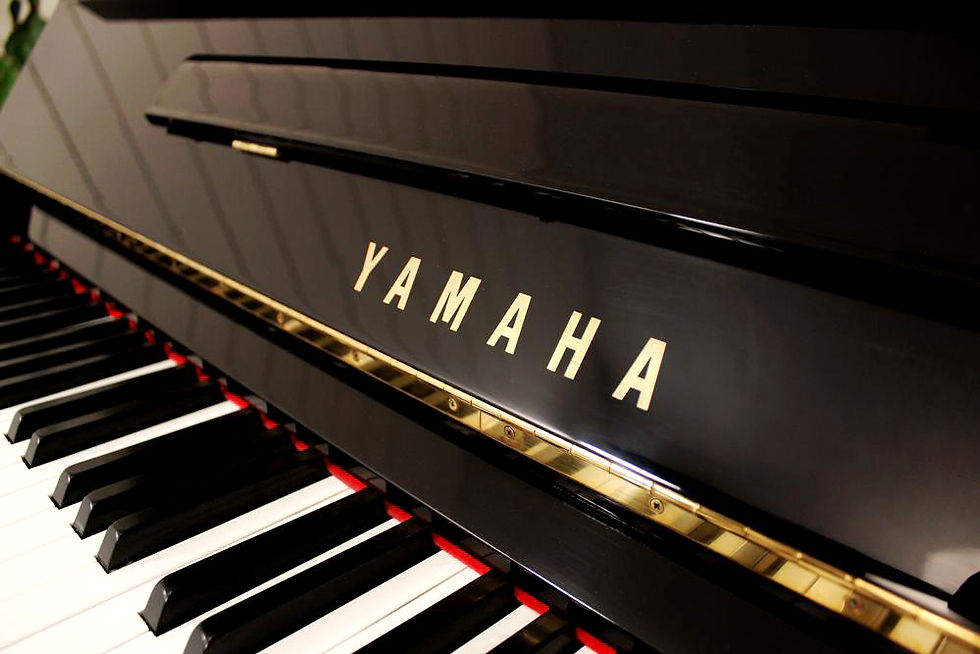
Whenever you start shopping for a high-quality acoustic piano, the conversation inevitably includes two legendary names: Yamaha and Kawai.
As piano technicians who regularly refurbish both brands in our workshop, and resource them from our local Santa Cruz area, San Jose and the entire San Francisco Bay Area, we've played and worked on hundreds of these instruments. We find them both to be consistently well made pianos.
You really can't go wrong with either one, but each offer some distinct experiences in tone, touch, and engineering. Understanding these differences between Yamaha and Kawai can help you find the perfect instrument for your musical voice.
The Hamamatsu Connection: A Shared History
To understand how these two brands compare, it is valuable to first look at where they started. You will notice that both companies originated in the same city—Hamamatsu, Japan—which remains the epicenter of Japanese piano manufacturing today. This shared heritage gives insight into how they both came to hold their dominant positions.
In the late 19th century, a watchmaker named Torakusu Yamaha successfully built the first reed organ in Japan, eventually founding Nippon Gakki Co. (which later became the Yamaha Corporation). One of his most talented apprentices was a young, brilliant innovator named Koichi Kawai.
Kawai was instrumental in helping Yamaha design and build its first acoustic pianos. However, in 1927, Koichi Kawai decided to branch off to pursue his own vision of piano manufacturing.
Today, both companies have evolved into global giants that continue to shape piano culture, but their shared history birthed two different philosophies on how a piano should sound, feel, and perform.
Tone: Bright and Crisp vs. Warm and Mellow
The most noticeable difference between a Yamaha and a Kawai is the sound profile. Generally, you will hear the following consensus regarding their tone:
Yamaha pianos are famous for their bright, clear, and crisp tone. The sound projects powerfully, making Yamaha a favorite for pop, jazz, and contemporary musicians who need their piano to cut through a mix of other instruments. If you sit down at a Yamaha P22 or a U-series upright, you will immediately notice the crystalline attack of the notes.
Kawai pianos, on the other hand, are known for their warm, mellow, and rich tone. The sound is often described as darker and more complex. Classical pianists frequently gravitate toward Kawai because the softer tonal palette allows for incredible expressiveness and dynamic range, especially in the lower registers. Models like the Kawai K-500 or the classic NS-15 deliver a deep, singing resonance that fills a room without being piercing.
From our experience, there can be exceptions to these rules depending on the model of Yamaha or Kawai, and every Yamaha and Kawai piano sounds different and has a unique voice.
Touch and Action: Traditional vs. Innovative
The "action" of a piano is the mechanical engine that translates the press of a key into the strike of a hammer against the string. This is where Yamaha and Kawai diverge the most in the construction of their pianos, and it translates into the touch or feel of playing the piano.
Yamaha's Approach: Yamaha relies on high-quality, traditional wooden action parts. Their manufacturing consistency is legendary. When you play a Yamaha, the touch feels incredibly precise, responsive, and slightly lighter, allowing for fast, articulate playing.
Kawai's Approach: Kawai has embraced modern material science. While their soundboards and cabinets remain traditional wood, Kawai introduced their Millennium III Action, which utilizes ABS-Carbon composites instead of wood for specific internal parts. They generally design their actions to have more resistance for dynamic control.
Based on our experience working with and playing Yamaha and Kawai actions, Yamaha pianos tend to have a lighter touch, and Kawai tends to have a heavier feel, though there are also exceptions here as well.
Which Piano is Right for You?
In our view, there is no "better" piano between Yamaha and Kawai—only the one that speaks to your personal preference.
If you love a bright, energetic sound with a crisp, responsive touch, Yamaha might be your perfect match. If you prefer a richer, warmer, classically-voiced tone with an innovative, weather-resistant action and weighted touch, Kawai is likely the way to go.
Here at Starlight Pianos, we have the chance to recondition both of these incredible brands, and notice each one has a high level of craftsmanship, precision, and a rich tone. Because every used acoustic piano develops its own unique tone over time, the best way to choose is to sit down and play them side-by-side.
Looking for a piano? Browse our Current Reconditioned Piano Inventory to see the Yamaha and Kawai models we currently have available for sale and delivery in the Bay Area.
Already own one? Regular maintenance is key to keeping your instrument sounding its best. Book a visit through our Piano Maintenance Services page, and we’ll make sure your Yamaha or Kawai is playing exactly as its Hamamatsu makers intended.


Comments